
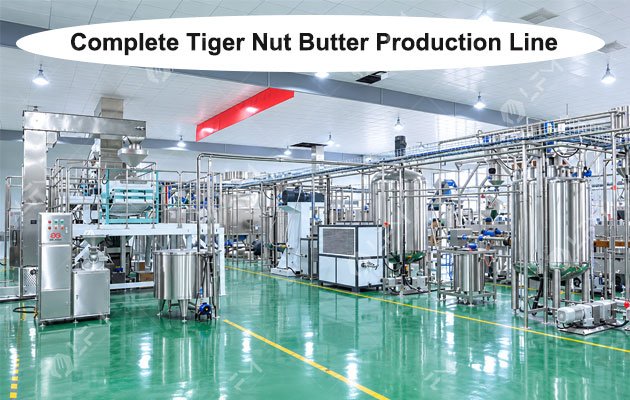
Tiger Nut Butter Production Line | Complete Processing Solution
Material: Tiger Nut
Capacity: 200-1000 kg/h
Loading Port: Qingdiao Port
Description: A complete processing solution for tiger nut butter, covering roasting, sorting, grinding, fine grinding, cooling, and filling.
Product Features
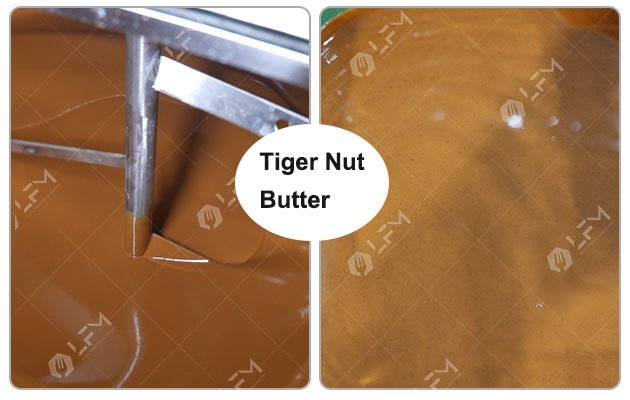
A tiger nut butter production line is a complete processing system designed to transform raw tiger nuts into smooth, flavorful tiger nut butter for commercial production. Depending on the required product texture, capacity, and packaging format, the line can integrate roasting, sorting, grinding, refining, cooling, storage, and filling equipment into one coordinated workflow.
LFM provides customized nut processing solutions for manufacturers looking to establish or expand tiger nut butter production.
Why Choose a Complete Tiger Nut Butter Processing Line?
Industrial tiger nut butter production involves several interconnected processing stages. The performance of one stage can affect the following stages and ultimately influence the consistency of the finished product.
For example, inconsistent roasting may affect flavor and grinding performance, while insufficient refining may result in a coarser texture than required.
A complete tiger nut spread production line helps manufacturers coordinate the entire process rather than selecting machines independently.
Key considerations include:
- Consistent roasting and flavor development
- Efficient grinding and refining
- Stable product temperature before filling
- Controlled material transfer between processing stages
- Suitable equipment capacity throughout the line
- Improved production organization
- Easier integration of packaging equipment
- Flexible configuration for different production requirements
Tiger Nut Butter Production Process
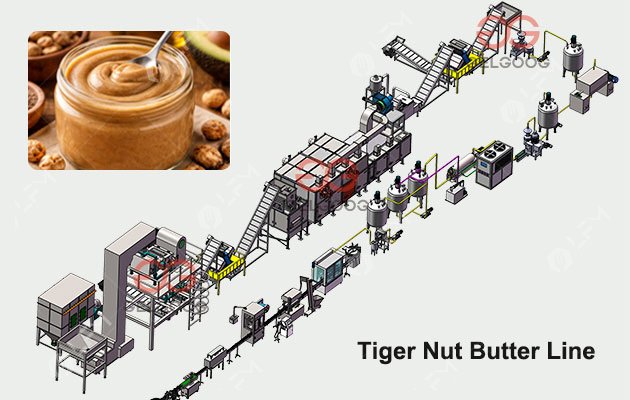
A typical tiger nut butter production line can be configured according to the following processing sequence:
Cleaning → Roasting → Sorting & Inspection → Colloid Mill Grinding → Ball Milling → Cooling → Temporary Storage → Filling
The actual process may vary according to raw material quality, product formulation, desired fineness, and production capacity.
1. Raw Tiger Nut Cleaning and Impurity Removal
The production process begins with raw material preparation.
Tiger nuts may contain dust, stones, plant residues, and other foreign materials after harvesting and transportation. A suitable cleaning system can remove unwanted materials before the tiger nuts enter the roasting section.
The cleaning configuration should be selected according to the actual condition of the customer's raw materials.
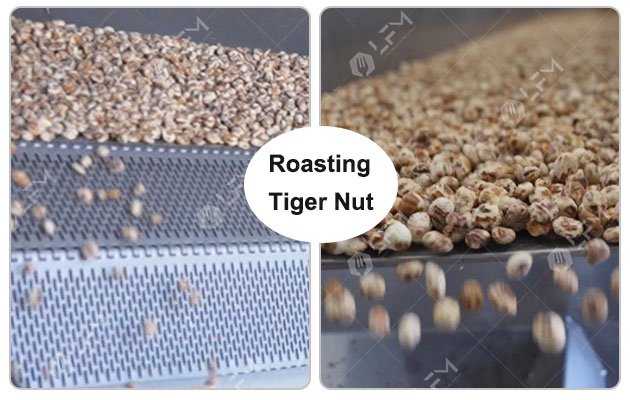
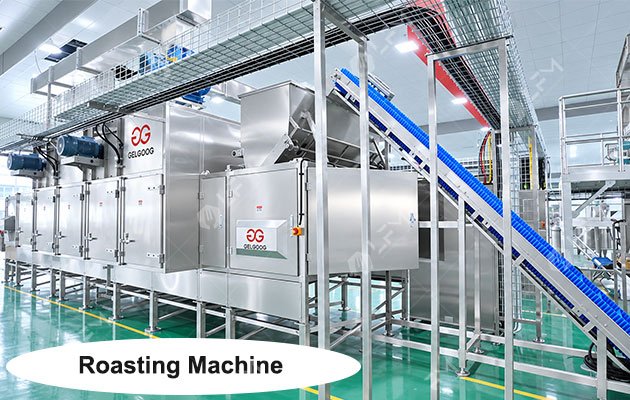
2. Continuous Tiger Nut Roasting
Roasting is an important stage in tiger nut butter production because it can influence the flavor, aroma, moisture level, and subsequent grinding behavior of the raw material.
LFM can configure a continuous roasting machine according to the required production capacity and processing conditions.
The roasting system can be evaluated based on:
- Production capacity
- Heating method
- Raw material characteristics
- Desired roasting level
- Available factory utilities
- Factory space and layout
There is no single roasting temperature and time suitable for every tiger nut product. Actual roasting parameters should be established through product testing and adjusted according to the raw material and desired final characteristics.
3. Color Sorting and Manual Inspection
After roasting, the tiger nuts can pass through a sorting and inspection section.
A color sorter can help identify certain visually different materials, while a manual inspection belt provides an additional opportunity to remove unsuitable pieces. (Not every project requires the same sorting configuration.)
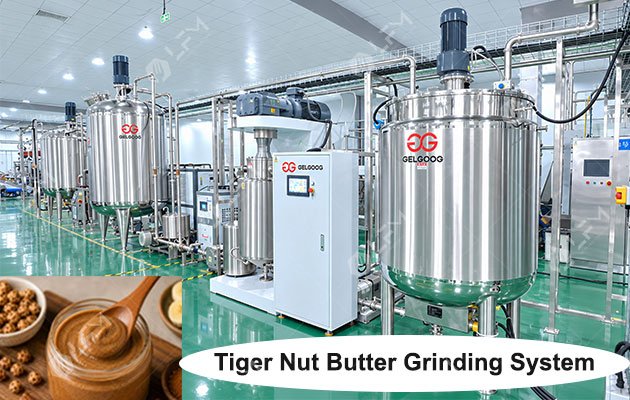
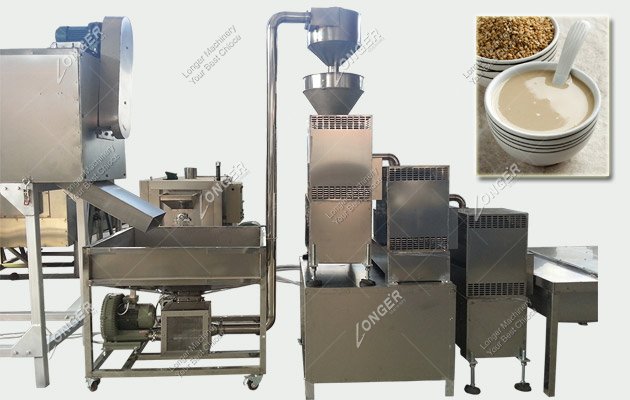
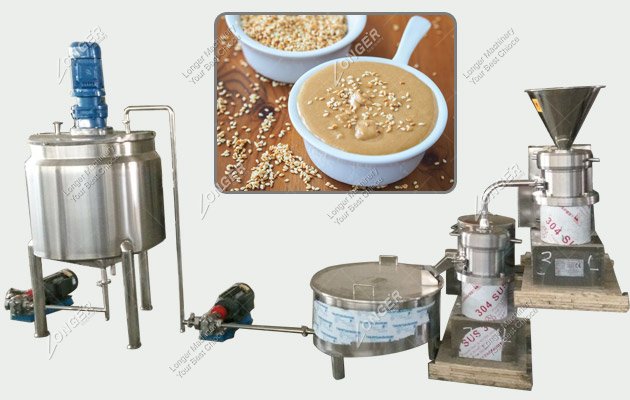
4. Colloid Mill for Initial Grinding
After roasting and sorting, the tiger nuts enter the initial grinding stage.
A colloid mill can grind the roasted tiger nuts into a relatively fine paste and prepare the material for further refining. The grinding system can therefore be selected and adjusted according to the customer's target product.
5. Ball Mill for Further Refining
For manufacturers requiring a smoother and more refined tiger nut butter, a ball mill can be added after initial grinding.
The ball milling stage provides further refining of the product and can help improve particle-size uniformity and mouthfeel. A ball mill is particularly useful when the final product requires a fine, smooth texture.
6. Tiger Nut Butter Cooling
Grinding and refining can increase product temperature. Therefore, temperature management is an important consideration before storage and filling.
A nut butter cooling system can reduce the temperature of the finished tiger nut butter before it enters the storage or filling stage.
7. Temporary Storage and Product Transfer
After cooling, the tiger nut butter can be transferred to a temporary storage tank before filling.
The storage system acts as a buffer between processing and packaging and can help coordinate different equipment capacities.
8. Filling and Packaging
The final processing stage is filling the tiger nut butter into jars or other suitable containers.
Depending on the project scope, the packaging section can also be expanded with capping, labeling, coding, sealing, and other packaging equipment.
Key Features of LFM Tiger Nut Butter Production Line
A commercial production line should do more than connect several machines. It should provide a processing system that is practical, scalable, and suitable for the customer's product requirements.
The main features of an LFM tiger nut butter production line include the following.
1. Complete Processing Solution
The production line can integrate multiple processing stages into one coordinated workflow.
From raw material preparation and roasting to grinding, refining, cooling, and filling, the equipment can be planned as a complete processing system rather than a collection of independent machines.
2. Customized Equipment Configuration
Production goals vary among manufacturers. Startups may require a relatively compact setup, whereas established food producers might need higher production capacity and greater automation.
LFM can tailor the equipment configuration to your specific needs, taking into account factors such as target capacity, product texture, and factory layout.
3. Continuous Processing Capability
Continuous equipment can help improve production organization and reduce unnecessary manual handling. A continuous roasting system combined with suitable grinding, cooling, storage, and filling equipment can support a more streamlined production workflow.
The actual level of continuity and automation depends on the selected equipment configuration and project capacity.
4. Suitable for Different Production Scales
The line can be designed according to different production requirements. Possible configurations can be developed for small-scale operations and startups, as well as for medium- and large-scale production facilities.
LFM currently offers solutions with capacities ranging from 200 to 1,000 kg/h, catering to the production needs of businesses of all sizes.
Advantages of a Complete Tiger Nut Spread Production Line
Beyond individual machine performance, an integrated processing solution can provide several practical advantages for commercial manufacturers.
Improved Production Consistency
Coordinating roasting, grinding, refining, cooling, and filling helps manufacturers establish a more repeatable processing workflow. Consistent processing conditions can contribute to more stable product texture and production quality.
Reduced Manual Material Handling
An integrated line can reduce unnecessary manual transfers between individual processing stages. This can improve workflow organization and help reduce handling requirements.
Better Process Coordination
A complete line allows equipment capacities and processing stages to be evaluated together.
More Consistent Product Texture
The combination of initial grinding and further refining can be configured according to the required tiger nut butter texture. For products requiring a smoother mouthfeel, additional refining can be considered.
Improved Production Efficiency
Continuous roasting, mechanized grinding, cooling, storage, and filling can reduce reliance on manual processing and support more efficient commercial production.
Get a Customized Tiger Nut Butter Solution from LFM
A successful tiger nut butter manufacturing project requires more than choosing a grinding machine. The roasting, grinding, refining, cooling, storage, and filling stages should work together to create a practical and repeatable production process.
LFM can help customers evaluate their requirements and develop a tiger nut butter production line based on their actual production goals.
To help LFM evaluate your project, you can provide:
- Target production capacity
- Raw tiger nut information
- Desired butter texture
- Product formulation
- Jar or container size
- Packaging requirements
- Factory space information
Contact LFM to discuss your tiger nut butter processing project and request a customized equipment proposal.
Email: serena@machinehall.com
Email: serena@machinehall.com
WhatsApp/Mobile: +8615515597212
Related Projects
Prev:Plumpy'Nut Peanut Butter Production Line End-to-end
Next:None