
LFM Delivers a 1 T/H Tiger Nut Butter Production Line in China
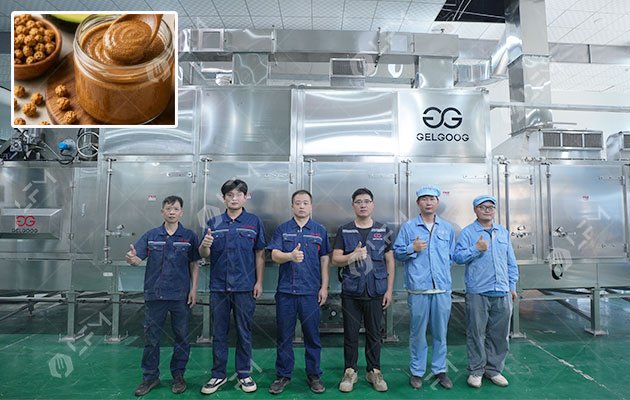
From Raw Tiger Nuts to Finished Butter
The production line follows a complete processing sequence:
Cleaning → Destoning and Metal Detection → Roasting → Color Sorting → Primary Grinding → Secondary Grinding → Vacuum Deaeration
- Cleaning removes impurities from incoming tiger nuts, while destoning and metal detection provide additional safeguards before further processing. These preparation stages help protect downstream equipment and establish a cleaner starting point for production.
- Roasting develops the flavor of the tiger nuts and prepares them for subsequent processing. Color sorting then helps remove visibly unsuitable materials before grinding.
- The prepared tiger nuts pass through primary grinding and secondary grinding to form butter with a finer, more uniform texture. Finally, vacuum deaeration helps remove entrapped air, supporting a more consistent product appearance and smoother handling during subsequent operations.
Coordinating Five Processing Stages Through PLC Control
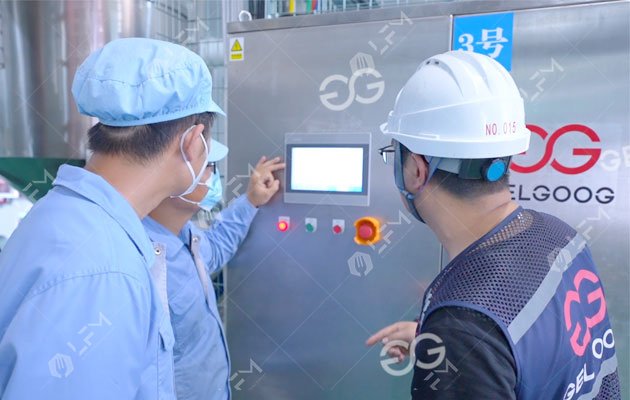
The line integrates cleaning, roasting, primary grinding, secondary grinding, and vacuum deaeration. A PLC control system coordinates these stages, helping operators manage the production sequence from a central interface.
Real-Time Visibility Across the Line
Operators can view temperature, equipment speed, material flow, weighing data, and conveying intervals during production. Having these parameters available together helps the team identify changes and assess whether upstream and downstream equipment are working in balance.
When monitored parameters move outside their configured limits, the system issues an alarm and makes adjustments according to programmed control logic. This supports timely intervention and more consistent process management.
For manufacturers evaluating complete tiger nut paste solution, the project highlights why equipment coordination deserves as much attention as individual machine capacity.
Supporting More Consistent Tiger Nut Paste Quality
Maintaining uniform results becomes challenging when roasting conditions, feed rates, or grinding settings vary.
In this project, primary and secondary grinding divide size reduction into two stages. This arrangement supports progressive processing, while coordinated feeding helps manage the transfer of material between machines.
Vacuum deaeration follows grinding to reduce entrained air in the paste. Final texture and processing settings should be confirmed through trials using the customer’s raw materials and product requirements.
When selecting a tiger nut butter production line, buyers should therefore consider the complete process alongside their target output.
Plan Your Tiger Nut Processing Project With LFM
This project in China demonstrates how efficient production can be achieved in commercial sauce manufacturing through the seamless integration of a centralized control system and a hygienic layout.
Planning a tiger nut paste production line? Contact LFM to discuss your raw materials, required capacity, product texture, and factory layout. Request a tailored equipment proposal and quotation for your production goals.
Message